Overview of Zolpidem vs Zopiclone
People who have trouble sleeping need to get a good night’s sleep, and drugs and other medicines are the most common ways to treat this problem.
As a group of medications, benzodiazepines work to relax you by binding to benzodiazepine receptors in the brain and spinal cord. As important as they are for sleep patterns, benzodiazepines can change the structure of sleep, cause withdrawal symptoms, cause sleeplessness to come back, slow breathing, and increase the risk of becoming dependent.
The effects of non-benzodiazepines, also known as Z-drugs, are similar to those of benzodiazepines but are better. People call the first few of these drugs “Z-drugs” because their names start with the letter Z.
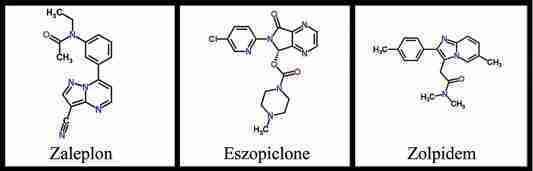
Image Credit – Z-Drug – an overview | ScienceDirect Topics
What Are Zolpidem and Zopiclone?
Zopiclone vs Zolpidem are two important medications of the Z-drugs family that are considered a safer option for sleep disorders.

As options for benzodiazepines, they help people fall asleep faster and have fewer problems while they sleep. It makes it possible to fall back asleep after waking up in the middle of the night.
Researchers have found that Z-drugs like Zopiclone and Zolpidem work by increasing GABA (Gamma-Aminobutyric Acid) signaling at the same GABA receptors as benzodiazepines. Still, they only bind to the selective affinity of the alpha-1 subunits. It makes a big difference in the kinds of side effects they have and lowers the risk of addiction, return sleeplessness, and abuse.

Zopiclone, Zolpidem and Zaleplon are the chief Z-drugs, among which Zopiclone and Zolpidem have a quicker onset of action than Zaleplon and help maintain sleep in a better manner. Zopiclone and Zolpidem have longer half-lives with a better hypnosedative profile, making them effective options for chronic insomniacs intolerant to benzodiazepines or unsatisfied with their sedative profile.
That said, differences do exist between Zopiclone and Zolpidem with regard to their half-lives, molecular mechanism and overall pharmacodynamics.
Key Differences Between Zolpidem and Zopiclone
Some of the main differences between Zolpidem and Zopiclone are their half-lives, which affect when they start working and how the person sleeps. It takes six hours for Zopiclone to reach half of its effect, while Zolpidem only takes 1.5 to 4.5 hours.
Sleep has three stages :-
S1 :- The short period between being awake and drifting off to sleep
S2 :- The stage of sleep before deep sleep. During this time, the body becomes more relaxed, with a drop in temperature, slower breathing and heart rate, and muscles that are at ease.
S3 :- The stage of deep sleep during which muscle tone, heart rate, and breathing rate all drop even more; also known as SWS (Slow Wave Sleep).
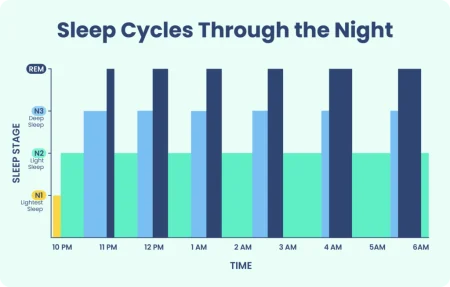
Image Credit – Stages of Sleep: What Happens in a Sleep Cycle.
A study examined the effects of Zopiclone 10 mg and Zolpidem 7.5 mg on nine healthy young male models. The S2 and S1 stages were very different with each medicine.
Zopiclone and Zolpidem could cause Slow-Wave Sleep, but Zopiclone caused the S1 phase to drop more quickly and the S2 phase to increase, meaning that Zopiclone users fell asleep faster and slept longer without being woken up.
Compared to the starting points, Zolpidem-induced changes in sleep were most potent in the 150 minutes after falling asleep. Zopiclone changed the sleep structure in the later stages, leading to deeper sleep.
Zolpidem did not change the sleep latency the next day, but people who took Zopiclone said their sleep delays decreased significantly. Taking either Zopiclone or Zolpidem did not make people feel sleepy. However, there were apparent changes in how they slept, which were caused by the different ways they worked with the GABA-A receptor class.
The next day, there were no significant differences in the moods or physical conditions of people who took Zopiclone or Zolpidem. Zopiclone users, on the other hand, said they fell asleep quickly and had a lot fewer problems while they were sleeping.
To understand how the two substances differ at the molecular level, you need to know about the alpha, beta, and gamma subunits of GABA-A receptors.
The five parts that make up GABA-A receptors are α1–6, β1–3, γ1–3, ε, ε, θ, π, and ρ1–3. They are ligand-gated chloride channels.
Zopiclone changes the GABAA receptors that contain γ3, but Zolpidem doesn’t alter that subunit. Zopiclone also changes the alpha-1 subunit in GABA-A receptors, making you calm and sleepy. Zolpidem, on the other hand, changes the alpha-2 molecule that helps people go from sleeping to awakening, controls sleep, and makes its anxiety-reducing effects possible.

Zopiclone exerts weaker alpha-2 binding that, coupled with its shorter duration of action, enables it weaker anxiolytic and anticonvulsant properties.
Effectiveness for Treating Insomnia.
Comparing Zopiclone and Zolpidem for sleeplessness, most human and animal studies found that Zolpidem was better at improving sleep delay or helping people fall asleep faster. Meanwhile, Zopiclone helped people sleep for more extended periods.
Fourteen-day double-blind trials with 479 chronic primary insomniacs gave Zopiclone 7.5 mg to 248 people and Zolpidem 10 mg to 231. There was a follow-up after one week to see if the rebound happened, but the investigator’s estimate of growth was the primary outcome.
People in the Zolpidem group dropped out of the study early, 32 people or 13.9%, and people in the Zopiclone group dropped out early, 18.1%, or 45 people.
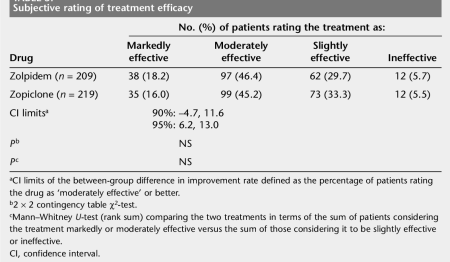
More than half of the people who took Zolpidem (142 out of 209) said their sleep was somewhat better, while only 61.6% of those who took Zopiclone (135% of 219 patients) said their sleep was slightly better. 8.8 percent of people who took Zolpidem said they fell asleep later than 7.7 percent of people who took Zopiclone. Compared to the Zopiclone group, only 15.4% of those who used Zolpidem had trouble going to sleep or a longer time until sleep started.
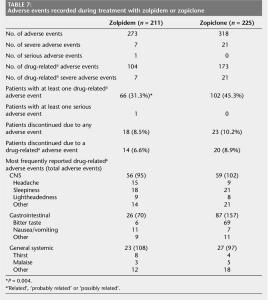
31.3 percent of people who took Zolpidem had side effects, compared to 45.3% of people who took Zopiclone. The most common side effect was a bitter taste. The results showed that Zolpidem was at least as good at treating sleep problems as Zopiclone. It was also better accepted and had less return effect when stopped.
Other tests comparing Zopiclone and Zolpidem in older people with late-onset Alzheimer’s showed that Zopiclone 7.5 mg helped them fall asleep quickly and sleep well.
Dosage and Usage Guidelines
Zopiclone pills come in two strengths: 3.75 mg and 7.5 mg. For most people, the 7.5 mg strength is the best amount.
Zolpidem comes in two strengths: 5 mg and 10 mg. The 10 mg strength is safer.
The amount of medicine taken depends on how badly the sleep problems affect you, how well you can handle the medicine or its ingredients, and your doctor’s treatment plan.
Thirty healthy people were given a single dose of Zolpidem 10 mg, Zopiclone 7.5 mg, and Flunitrazepam 1 mg. The effects on their motor activity were compared. All three drugs significantly decreased motor activity during the night they were being treated, but they did not affect activity during the day.
According to other trials that compared the best doses of Zopiclone and Zolpidem, Zolpidem had significantly fewer long-lasting effects than Zopiclone. Notably, neither medicine was said to make driving less safe.
Side Effects and Risks
People of all ages accept Zopiclone and Zolpidem well, but Zopiclone works better for older people to help them sleep. Zopiclone can cause stomach problems, a bitter taste, and a dry mouth when taken in large amounts. Zolpidem can cause side effects like drowsiness, headaches, feeling like throwing up, and back pain. People who take Zopiclone have said it tastes bitter more often than those who take Zolpidem.
Still, they should be used with care because they make people sleepy and have an effect on their ability to think and move.
Which Has a Lower Risk of Addiction?
A study of 393 mental outpatients who took either Zolpidem or Zopiclone for at least three months found that people who took Zolpidem were more dependent on it and felt less necessary than people who took Zopiclone. People who took Zolpidem in higher doses or for more extended amounts of time said they had severe depressive symptoms and were very dependent on it.
Those who used Zopiclone, on the other hand, had more lousy drug responses caused by overdose. More than 33,240 reports of misuse, abuse, dependence, and withdrawal-related adverse drug responses showed that Zopiclone users had more dependence and overdose-related symptoms than Zolpidem users but fewer misuse, abuse, and withdrawal symptoms.
Comparing Next-Day Effects
Zolpidem’s half-life is shorter than Zopiclone’s, which means it doesn’t stay in your body as long and doesn’t affect your brain as much.
A review of twenty studies found that Zopiclone and Zolpidem moderately affected verbal memory. Zolpidem also had a moderate effect on attention. Zolpidem use slowed the patients’ thinking speed, while Zopiclone use slowed their working memory.
People who took Zopiclone at night said they were mostly mentally alert in the morning after taking it at night.
A study with 48 healthy adults aged 65 and up found that taking Zolpidem or Zopiclone did not significantly affect recall. Still, Zopiclone had a slightly more substantial effect than Zolpidem. Zopiclone and Zolpidem did not change their ability to focus.
Interactions with Other Medications and Alcohol
When you use Z-drugs instead of regular benzodiazepines, you experience a lot fewer side effects and drug combinations. Still, medication interactions can happen and cause a wide range of unpleasant effects.
When taken with opioids, alcohol, or antidepressants, Zopiclone and zolpidem can make you sleepy, slow your breathing, or make you feel dizzy.
Researchers looked at how Zaleplon, Zolpidem, and Zopiclone might interact with CYP inducers like Rifampicin, CYP inhibitors like Ritonavir and Erythromycin, Histamine, antidepressants, antipsychotics, and benzodiazepines. They found that both Zopiclone and Rifampicin tend to interact with each other. When taken with Rifampicin, either of these medicines has less effect on the body’s metabolism and makes it less calming.
On the other hand, taking ketoconazole, erythromycin, or cimetidine can stop Zopiclone and Zolpidem from working correctly and make them more hypnotic, which raises the risk of overdose consequences and breathing issues.
To stay safe, don’t mix Zopiclone or Zolpidem with alcohol, antidepressants, antifungals, or other CYP enzyme inhibitors that can make the sedatives less effective or cause problems with excess.
Who Should Avoid These Medications?
Zopiclone and Zolpidem work, but everyone can’t use them because they are GABA-A receptor blocks.
Prescription drugs should not be used during pregnancy because they have been shown to raise the chance of unplanned miscarriage, cesarean birth, low birth weight, and other problems. Because they can increase the chance of congenital malformation and other harmful cognitive effects, women who are breastfeeding should also not use them.
Researchers have found that taking more significant amounts of Z-drugs is linked to a higher chance of fractures and strokes, especially in people with dementia. Because of this, older people and people who have had memory in the past should be careful when taking Zopiclone or Zolpidem. For the patient’s safety, prescriptions for more significant amounts in people with dementia should be looked over regularly.
Even though Z-drugs have a much lower risk of death than benzodiazepines, they can raise the risk of issues in people who are heavy drinkers, have liver or kidney problems, or are depressed. These people should not use them at all.
Conclusion
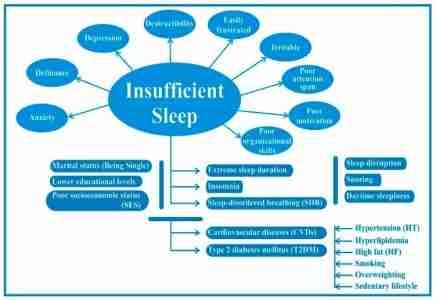
One-third of people around the world have trouble sleeping, which can hurt their heart, brain, and general physical and mental health. Even though it has been found that teens need 9.25 hours of sleep each night, many of them struggle to get that much.
Having trouble sleeping can first show up as restlessness, difficulty concentrating, and feeling sleepy during the day. If it is not addressed, it can raise the risk of heart disease, make it harder to do well at work or school, and cause sadness, anxiety, and even early death more likely.
Zopiclone and Zolpidem, which are Z-drugs, have proven to be safe alternatives to benzodiazepines that help people fall asleep quickly, sleep well, and get work done during the day. They are in the same class, but they are not the same. You should talk to your doctor about the best way to improve your sleep architecture.
Z-drugs like Zopiclone and Zolpidem are generally thought to be safe, but they can become addictive if they are used in large amounts for a long time. It is a little more likely that someone will abuse and become dependent on Zolpidem than on Zopiclone.
For safe usage, ensure that you take them for a short period and taper their use before discontinuing them altogether.
Reference Links:
- Psychiatry.org – What are Sleep Disorders?.
- https://www.ncbi.nlm.nih.gov/books/NBK470159/
- Non-benzodiazepines for the treatment of insomnia – PubMed.
- https://www.sciencedirect.com/topics/pharmacology-toxicology-and-pharmaceutical-science/nonbenzodiazepine
- Z-Drug – an overview | ScienceDirect Topics.
- https://pubmed.ncbi.nlm.nih.gov/23404347/
- Nonbenzodiazepine – an overview | ScienceDirect Topics
- https://pubmed.ncbi.nlm.nih.gov/15005637/
- https://pubmed.ncbi.nlm.nih.gov/10896032/
- A double-blind comparative study of Zolpidem versus Zopiclone in the treatment of chronic primary insomnia – PubMed.
- https://www.nature.com/articles/s41386-021-01191-3
- https://www.sciencedirect.com/science/article/abs/pii/S0924977X02001530
- Appendix 1: Review of Various Trials using Zolpidem at Higher Doses
- https://link.springer.com/article/10.1007/s002130050961
- The acute cognitive effects of Zopiclone, Zolpidem, Zaleplon, and eszopiclone: a systematic review and meta-analysis – PubMed.
- https://pubmed.ncbi.nlm.nih.gov/8241608/
- https://pmc.ncbi.nlm.nih.gov/articles/PMC6441128/
- https://pubmed.ncbi.nlm.nih.gov/12751920/